Portland, Oregon
Every Board
Has a Story.
We Give It
a New Chapter.
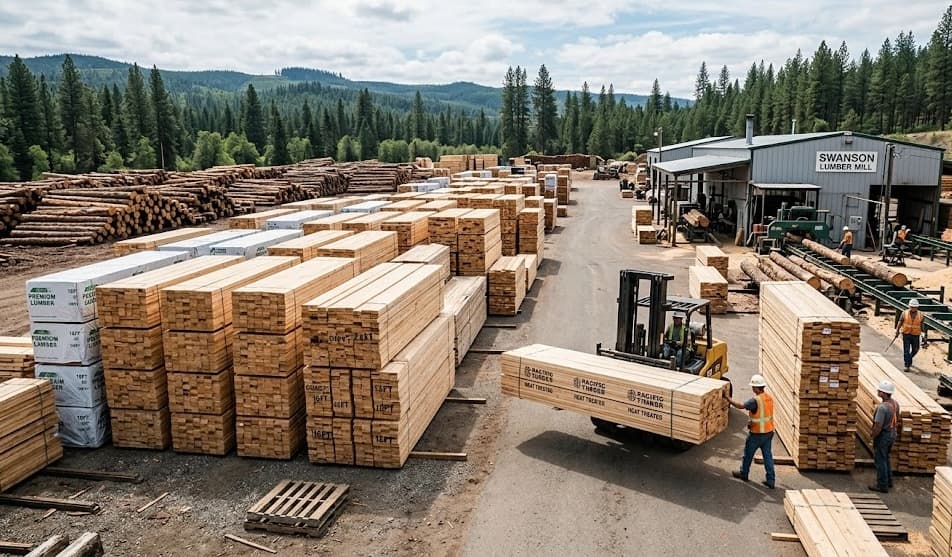
Portland's premier reclaimed lumber yard. We buy, sell, mill, and deliver salvaged wood — keeping old-growth character out of landfills and in your next project.
Request a Quote
Our Yard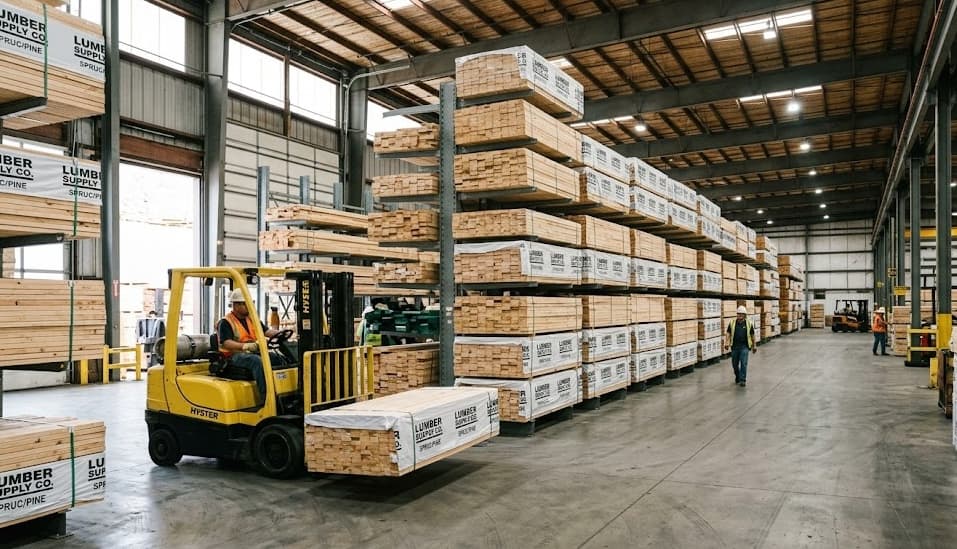 Warehouse
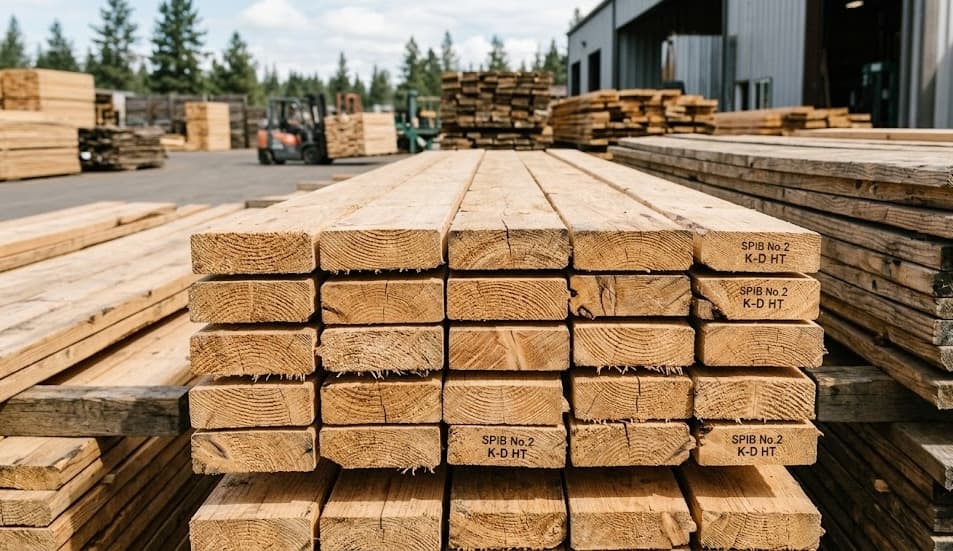 Graded Stock
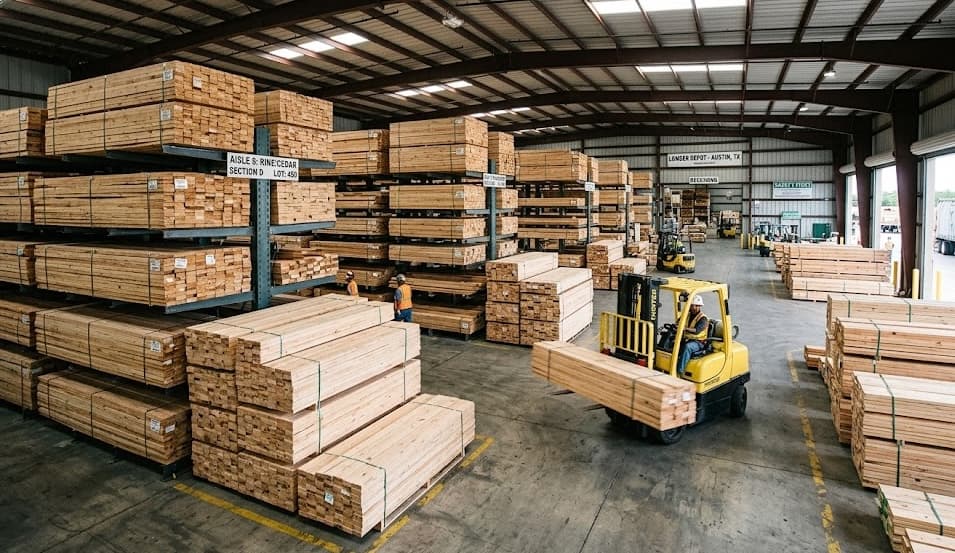 Inventory
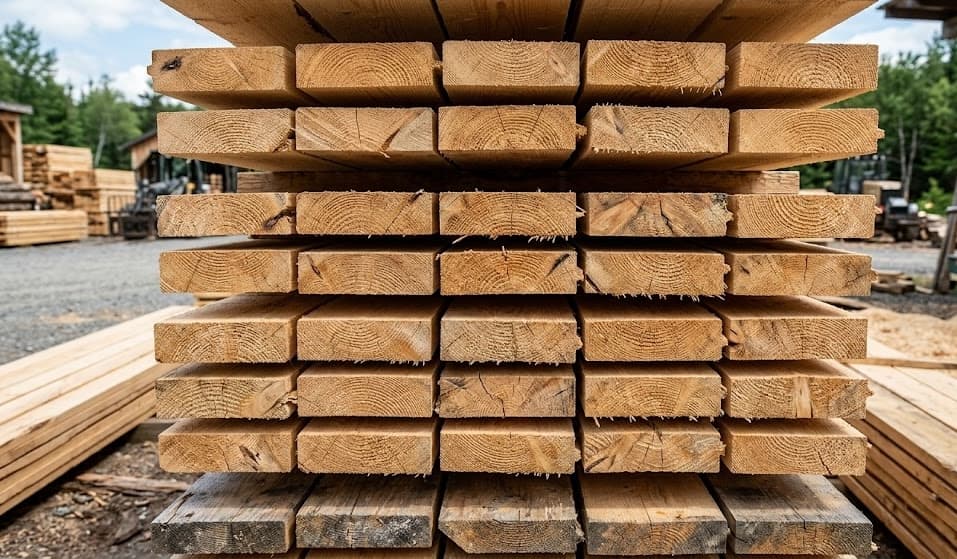 End Grain
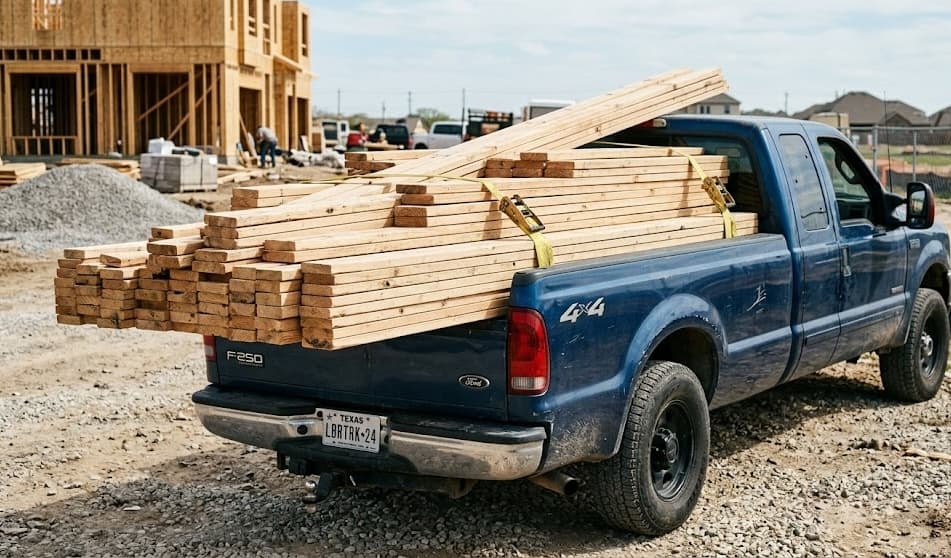 Delivery
Why Reclaimed
Wood That's Lived. Wood That Lasts.
Reclaimed lumber isn't just sustainable — it's superior. Old-growth timber harvested decades or centuries ago features tighter grain, greater density, and richer character than anything available from modern mills.
Every piece we process has been salvaged from barns, factories, warehouses, and historic structures across the Pacific Northwest. We de-nail, kiln-dry, grade, and mill each board to meet modern standards while preserving the irreplaceable patina of age.
Learn about our eco mission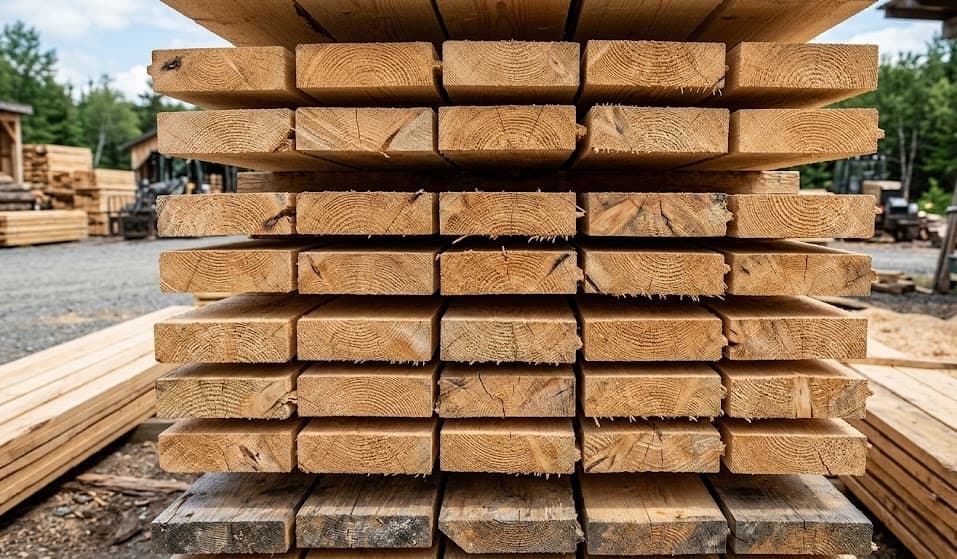
Provenance & Heritage
Every Board Has a Story
We trace and document the origin of our materials. Here are some of the remarkable journeys our lumber has taken — from historic structures to beautiful new creations.
1923 Portland Grain Elevator
This massive 12x12 beam spent a century supporting grain silos along the Willamette River waterfront. When the elevator was finally decommissioned in 2021, our salvage crew carefully extracted over 8,000 board feet of dense, tight-grain Douglas Fir. The beam that became this dining table still carries the faint stamp of the Portland Lumber Company, dated 1923. Its new owners in the Pearl District say it is the centerpiece of every dinner party.
1940s Willamette Valley Barn
A third-generation farming family in McMinnville reached out when their grandfather's dairy barn finally needed to come down. The White Oak framing inside was hand-hewn with broadaxe marks still visible on every face. We milled over 1,200 square feet of wide-plank flooring from those timbers. The family kept enough for their own farmhouse renovation, and the rest went to a boutique hotel in Bend that wanted authentic Willamette Valley character underfoot.
1910 Astoria Cannery
The old fish cannery on the Astoria waterfront yielded some of the most beautiful Heart Pine we have ever processed. Soaked in decades of salt air and Pacific Northwest rain, the exterior was silver-gray, but once we planed the surface, the rich amber heartwood underneath was breathtaking. A farm-to-table restaurant in Southeast Portland commissioned a 16-foot seamless bar top and matching shelving from these boards. Diners now rest their elbows on wood that once supported thousands of pounds of Columbia River salmon.
1955 Lake Oswego Mid-Century Home
When a mid-century modern home in Lake Oswego underwent a complete remodel, the original Western Red Cedar siding was too beautiful to send to the dump. Our team carefully removed each plank, revealing the signature warm reddish-brown color beneath decades of paint. After de-nailing and light sanding, the cedar found new life as privacy fence panels and accent siding on a modern ADU in the Alberta Arts District. The natural rot resistance of old-growth cedar means these boards will likely outlast the new structure.
1887 Salem Wool Mill
American Chestnut is the holy grail of reclaimed wood. Before the blight of 1904 wiped out nearly every chestnut tree in North America, this species was the backbone of Eastern and Pacific Northwest construction. The Salem Wool Mill, built with chestnut shipped by rail from Appalachia, gave us a rare cache of wide chestnut boards. A collector in Portland Heights had us craft a seven-foot fireplace mantel and a set of floating shelves. Each piece carries the distinctive warm brown color and wormy character that makes reclaimed chestnut virtually irreplaceable.
Sustainability by the Numbers
Our Environmental Impact
Fifteen years of reclaimed lumber operations add up to a meaningful difference for the planet. Here is a detailed look at the environmental impact of choosing reclaimed over new.
Carbon Emissions Prevented
Every board foot of reclaimed lumber we process represents carbon that stays locked in the wood rather than being released through decomposition in a landfill or incineration. Over our fifteen years of operation, we have prevented an estimated 1,240 tons of carbon dioxide from entering the atmosphere — the equivalent of taking 270 cars off the road for an entire year.
Fresh Water Preserved
Logging and processing virgin timber is an incredibly water-intensive process. From the irrigation of tree farms to the enormous volumes used in modern sawmill operations, producing new lumber consumes thousands of gallons per board foot. By reclaiming existing wood, we have helped preserve an estimated 18.5 million gallons of fresh water that would have been consumed in new timber production.
Old-Growth Trees Not Cut
Each reclaimed beam or board we salvage means one less tree needs to be harvested. Over the years, our reclamation efforts have preserved an estimated 2,500 mature trees that would otherwise have been felled. Many of these trees are in sensitive old-growth forests in the Pacific Northwest, where a single Douglas Fir can be over 200 feet tall and 500 years old.
Landfill Waste Prevented
Construction and demolition debris accounts for roughly 30% of all landfill waste in the United States. Wood is one of the largest components of that waste stream. By salvaging usable lumber from demolition sites, we have diverted approximately 890 tons of wood from Oregon landfills — freeing up space and reducing the environmental burden on our waste management infrastructure.
Energy Conservation
Processing reclaimed lumber uses roughly 80% less energy than harvesting, transporting, and milling virgin timber. When you factor in the heavy machinery used in logging, the fuel for transport trucks, and the enormous energy demands of industrial sawmills, our reclamation process has saved an estimated 3,400 megawatt-hours of energy — enough to power over 300 Portland homes for a full year.
Methane Emissions Avoided
When wood decomposes in an anaerobic landfill environment, it produces methane — a greenhouse gas 80 times more potent than carbon dioxide over a 20-year period. By rescuing lumber before it reaches the landfill, we have prevented an estimated 520 tons of methane from being generated. This is one of the most overlooked environmental benefits of reclaimed lumber.
Forest Land Protected
By reducing the demand for freshly harvested timber, our reclamation work indirectly protects thousands of acres of forest from being logged. These forests serve as critical habitats for wildlife, natural water filtration systems, and carbon sinks. Our estimated 4,100 acres of preserved forest is roughly the size of six times Washington Park here in Portland.
Sustainable Builds Supported
From intimate home renovations to large-scale commercial projects, we have supplied reclaimed materials to over 1,800 building projects throughout the Pacific Northwest. Each project represents a client who chose sustainability without sacrificing quality — proving that responsible building practices and beautiful design are not mutually exclusive.
Our Products
Reclaimed. Refined. Ready to Install.
From raw salvaged timber to finished, custom-milled products — everything you need for your sustainable building project.
Reclaimed Lumber
Dimensional lumber salvaged from historic structures. Douglas Fir, Oak, Pine, and more.
View Details →Reclaimed Beams
Massive timbers with character. Perfect for exposed beam ceilings and structural features.
View Details →Reclaimed Flooring
Wide-plank flooring with the warmth and depth that only decades of aging can produce.
View Details →Siding & Paneling
Weathered and barn-wood siding for stunning accent walls and exterior applications.
View Details →Custom Milling
We mill reclaimed timber to your exact specifications. Any dimension, any profile.
View Details →Accessories & Hardware
Reclaimed hardware, brackets, and accent pieces to complete your project.
View Details →Project Showcase
What Our Clients Build
Reclaimed lumber transforms every type of space. From intimate home renovations to landmark commercial projects, here is how our clients put our materials to work.
Residential Remodels
There is nothing quite like reclaimed wood to transform a standard home renovation into something extraordinary. Homeowners who choose reclaimed lumber for their kitchen remodel, bathroom update, or living room renovation discover that every plank carries a warmth and depth that no factory-finished product can replicate. Wide-plank reclaimed flooring grounds a room with gravitas, while a reclaimed beam mantel becomes the focal point above a fireplace. We have supplied materials for hundreds of Portland-area home remodels, from cozy Hawthorne bungalows to expansive West Hills estates. Our team works closely with homeowners to match the right species, finish, and character to their design vision.
Restaurant & Bar Interiors
Portland is a city that values authenticity, and nowhere is that more evident than in its restaurant scene. Reclaimed lumber has become the material of choice for restaurateurs who want their space to tell a story. We have built bar tops from cannery Heart Pine, dining tables from barn Oak, accent walls from weathered cedar, and host stands from salvaged Douglas Fir. The natural imperfections — nail holes, saw marks, checking, and patina — create an atmosphere that feels lived-in and genuine from day one. Our wood has found its way into some of Portland's most celebrated dining establishments.
Retail Spaces
Forward-thinking retailers understand that their store environment is an extension of their brand. Reclaimed lumber shelving, countertops, and display fixtures communicate values of sustainability, craftsmanship, and attention to detail. We have supplied materials for boutiques on NW 23rd, shops in the Pearl District, and flagship stores throughout downtown Portland. Whether it is a raw-edge shelf displaying artisan goods or a polished reclaimed counter for a jewelry store, our materials help retailers create spaces that customers remember and return to.
Office Renovations
The modern office is evolving beyond sterile cubicle farms, and reclaimed lumber is at the forefront of that transformation. Tech companies, design firms, architecture studios, and coworking spaces throughout Portland have used our reclaimed materials to create workspaces that inspire creativity and reflect corporate values around sustainability. Conference tables made from single salvaged slabs, accent walls of mixed reclaimed species, and reception desks built from old-growth timber help companies attract talent and impress clients while doing right by the environment.
Furniture Making
Portland is home to a thriving community of furniture makers, woodworkers, and artisans who appreciate the unmatched quality of reclaimed wood. Professional and hobbyist furniture makers source materials from our yard for everything from dining tables and bed frames to custom cabinetry and one-of-a-kind art pieces. The density and stability of old-growth reclaimed timber makes it ideal for fine furniture, while the unique character marks — old mortise pockets, hand-hewn faces, and oxidized patinas — ensure that no two pieces are ever alike. We are proud to be a primary supplier for many of Portland's most respected furniture studios.
Outdoor Living
The Pacific Northwest lifestyle centers around the outdoors, and reclaimed lumber is perfect for creating outdoor living spaces with soul. We supply materials for decks, pergolas, garden beds, fences, and outdoor furniture. Species like Western Red Cedar and old-growth Douglas Fir naturally resist rot and insects, making them ideal for exterior applications without the chemical treatments that new pressure-treated lumber requires. Our clients have built everything from backyard decks overlooking Mount Hood to rooftop terraces in the Pearl District, all using wood that has already proven its durability over decades of service.
Side by Side
The Reclaimed Advantage
How does reclaimed lumber stack up against new? Here is a detailed comparison across six critical factors that matter to builders, designers, and homeowners.
Density & Strength
Reclaimed lumber sourced from old-growth forests features significantly tighter growth rings than modern timber. Trees that grew slowly over 200-500 years produced wood with a density that simply cannot be replicated by today's fast-rotation tree farms. This translates to greater structural strength, better nail-holding capacity, and a hardness that resists dents and wear. Independent testing consistently shows that old-growth reclaimed Douglas Fir, for example, can be up to 40% harder than new-growth Fir from a modern mill.
New lumber is typically harvested from trees grown on 25-40 year rotations in managed plantations. These fast-growing trees produce wider growth rings and lower density wood. While it meets modern building code requirements, new dimensional lumber lacks the structural density and hardness of old-growth timber. It is more prone to denting in flooring applications and has lower natural resistance to wear over time.
Character & Aesthetics
Every piece of reclaimed lumber carries decades or centuries of visual history. Nail holes from original construction, saw marks from early mill equipment, checking from natural aging, and the deep, rich patina that only time can produce. These character marks are impossible to replicate artificially and give reclaimed wood an authenticity that interior designers and architects prize. The color variations within a single reclaimed board can span an entire spectrum from honey gold to deep chocolate.
New lumber has a uniform, predictable appearance. While it can be stained and finished to achieve various looks, it lacks the natural patina, character marks, and depth of color that come with age. Manufacturers attempt to replicate the "reclaimed look" through distressing techniques, but the results are visually distinguishable from genuinely aged wood to anyone familiar with the real thing.
Environmental Impact
Choosing reclaimed lumber is one of the most impactful environmental decisions a builder can make. No new trees are harvested. No forests are cleared. The carbon already stored in the wood remains sequestered rather than being released through decomposition or burning. Processing reclaimed wood uses approximately 80% less energy than producing new lumber. And every board reclaimed is one less piece of construction debris in an already-strained landfill system.
Even sustainably managed forestry operations involve significant environmental costs. Clear-cutting disrupts ecosystems, logging roads cause erosion and water pollution, heavy machinery burns fossil fuels, and transportation from remote forests to mills to retailers generates substantial carbon emissions. While certifications like FSC help, the environmental footprint of new lumber production remains orders of magnitude larger than reclaimed processing.
Dimensional Stability
Reclaimed lumber has already undergone decades of natural drying, expansion, and contraction cycles. This means the wood has reached its equilibrium and is far less likely to warp, cup, twist, or shrink after installation. Old-growth timber's tight grain structure also makes it inherently more dimensionally stable than new-growth wood. When we kiln-dry reclaimed lumber, we are fine-tuning an already-stable product rather than trying to rapidly force moisture out of freshly harvested timber.
Freshly milled lumber contains significant moisture and has not yet gone through the natural aging process that stabilizes wood over time. Even kiln-dried new lumber can continue to move, shrink, and warp as it acclimates to its environment over the first several years after installation. Gaps in flooring, cracks in trim, and warped framing are common issues with new lumber that are far less prevalent with properly processed reclaimed material.
Unique History
Reclaimed lumber connects your project to the rich history of the Pacific Northwest. The beam in your living room might have spent 80 years supporting a Willamette Valley barn. Your flooring might have been the deck of a Columbia River cargo building. Your mantel might come from one of Portland's original waterfront warehouses. We document the provenance of our materials whenever possible, giving you a story to tell for generations. This historical connection adds an intangible but deeply felt value to any space.
New lumber comes from managed tree farms with no historical significance. While functional and sometimes sustainably sourced, it carries no story, no provenance, and no connection to the built heritage of the region. It is a commodity product, interchangeable and anonymous. For clients who value meaning and narrative in their built environment, new lumber simply cannot compete.
Investment Value
Reclaimed lumber is a finite and increasingly scarce resource. As historic structures are demolished and the supply of salvageable old-growth timber dwindles, the value of reclaimed wood continues to appreciate. Projects built with reclaimed materials consistently appraise higher and attract more buyer interest than those built with conventional materials. Real estate agents in Portland report that reclaimed wood features are among the most frequently cited selling points in listings. Your investment in reclaimed lumber is an investment that grows over time.
New lumber is a commodity subject to market fluctuations, and it depreciates from the moment it is installed. There is an effectively unlimited supply of new dimensional lumber, which means it carries no scarcity premium. While new lumber serves its structural purpose, it does not contribute to property value in the same way that distinctive reclaimed materials do.
Our Services
From Salvage to Your Doorstep
Full-service reclaimed lumber operations. We handle everything from sourcing and milling to delivery.
We Buy Your Lumber
Got reclaimed wood? We pay fair prices for quality salvaged materials.
Custom Milling
From rough timber to finished product. Planing, sawing, and custom profiles.
Delivery & Transport
We deliver throughout the Portland metro area and the Pacific Northwest.
Salvage & Deconstruction
Professional deconstruction services that preserve materials for reuse.
Know Your Wood
Species Spotlight
We carry a diverse selection of reclaimed wood species, each with its own unique characteristics, history, and ideal applications. Here are the stars of our inventory.
Douglas Fir
The workhorse of Pacific Northwest construction for over a century, old-growth Douglas Fir features tight, straight grain with a warm pinkish-tan color that deepens to rich amber with age. Its exceptional strength-to-weight ratio made it the framing timber of choice for warehouses, bridges, and industrial buildings throughout Oregon and Washington. Reclaimed Douglas Fir is our most popular species, prized for flooring, beams, and mantels.
White Oak
Renowned for its durability and water resistance, White Oak was the go-to species for barns, barrel-making, and boat-building. Reclaimed White Oak features a distinctive ray-fleck pattern when quarter-sawn and a warm golden-brown color that develops extraordinary depth over decades. Its closed-cell structure makes it naturally resistant to moisture, perfect for kitchens, bathrooms, and outdoor applications.
Heart Pine
Heart Pine refers to the dense heartwood of Longleaf Pine, a species that was heavily harvested throughout the 19th century. The heartwood is saturated with natural resins that give it a rich amber-to-deep-red color and exceptional hardness — nearly as hard as some tropical hardwoods. Reclaimed Heart Pine is highly sought after for flooring and tabletops, offering a warmth and richness that no modern pine can match.
Western Red Cedar
Prized by Pacific Northwest indigenous peoples for millennia, Western Red Cedar is naturally aromatic and exceptionally resistant to rot, decay, and insect damage. Reclaimed old-growth Cedar features a deep reddish-brown heartwood with beautiful variations in color. It is ideal for exterior siding, fencing, and any application where natural weather resistance is paramount — no chemical treatment required.
American Chestnut
Once the most abundant hardwood in eastern North America, the American Chestnut was virtually wiped out by a fungal blight in the early 1900s. Reclaimed American Chestnut is exceedingly rare and highly prized by woodworkers and collectors. It features a warm, light-brown color with distinctive wormy character from decades of insect activity. Finding reclaimed Chestnut is like discovering buried treasure — we acquire it whenever possible.
Black Walnut
The crown jewel of North American hardwoods, Black Walnut features a rich chocolate-brown heartwood with swirling grain patterns that are simply stunning. Reclaimed Black Walnut is rare, as it was seldom used in structural applications due to its value as a furniture wood. When we do find it — usually from old farmhouses or estate properties — it commands premium prices and is typically reserved for high-end furniture, mantels, and feature pieces.
Simple Process
How It Works
From first contact to final delivery, we make sourcing reclaimed lumber straightforward. Here is our five-step process for getting the perfect materials for your project.
Browse or Contact Us
Start by exploring our online inventory or visiting our Portland yard in person. We maintain a regularly updated selection of reclaimed lumber, beams, flooring, and siding in a wide range of species and dimensions. If you have a specific project in mind, give us a call or fill out our contact form — our team can help you identify the right materials for your needs, estimate quantities, and provide pricing. We work with homeowners, contractors, architects, designers, and furniture makers, and we are happy to consult on projects of any size.
We Source Your Materials
If we do not have exactly what you need in our current inventory, our extensive network of salvage contacts throughout the Pacific Northwest allows us to source specific species, dimensions, and quantities. We actively monitor demolition projects, barn takedowns, industrial decommissions, and estate sales across Oregon, Washington, and Northern California. Our sourcing team has relationships with demolition contractors, property owners, and fellow reclaimed lumber dealers that have been built over fifteen years of operation. We can typically locate specialty materials within two to four weeks.
Custom Processing
Once your materials are identified, our mill shop goes to work. Every piece of reclaimed lumber we sell passes through our full processing pipeline: careful de-nailing using metal detection equipment, surface planing to reveal the beautiful wood beneath years of grime, custom milling to your exact specifications, and kiln-drying to industry-standard moisture content levels. We can produce any profile — tongue-and-groove flooring, shiplap siding, live-edge slabs, dimensional framing, or completely custom shapes. Our experienced millers know how to maximize the beauty and yield of each piece.
Quality Inspection
Before any material leaves our facility, it undergoes a rigorous quality inspection. We check for residual metal with industrial-grade detectors, verify moisture content with calibrated pin meters, inspect for structural defects like hidden rot or excessive checking, and grade each piece according to our internal standards. We are transparent about the character and condition of every board — if a piece has knots, nail holes, or checking, we will tell you upfront. Our clients trust us because we never misrepresent our materials. You receive exactly what was described, every time.
Delivery or Pickup
The final step is getting your materials to your project site. We offer flexible pickup from our Portland yard for local clients — just back up your truck and we will help you load. For larger orders or clients outside the immediate metro area, we provide delivery service throughout the Portland region and can arrange freight shipping anywhere in the Pacific Northwest. Our delivery team uses proper dunnage and strapping to ensure your reclaimed materials arrive in perfect condition. We also coordinate delivery timing with your project schedule so materials arrive when you need them, not before you have a dry place to store them.
Carbon Impact Calculator
See exactly how much your reclaimed lumber project helps the planet. Enter the board feet you need to calculate your environmental savings.
Client Voices
What People Are Saying
Architects, contractors, homeowners, and makers trust Lumber Portland for quality reclaimed materials. Here is what they have to say about working with us.
We specified reclaimed Douglas Fir beams for the lobby of our new mixed-use project in the Pearl District, and Lumber Portland delivered beyond our expectations. The quality of the timber was impeccable — tight grain, beautifully aged, and perfectly milled to our dimensions. What really set them apart was the documentation they provided on the origin of each beam. Our clients love knowing that the wood in their building once supported a 1930s grain warehouse along the Willamette. That kind of provenance is marketing gold for a sustainability-focused development.
Sarah Chen
Principal Architect, Cascade Design Group
As a general contractor, I need materials that show up on time, in spec, and ready to install. I have been burned by other reclaimed lumber suppliers who delivered boards full of hidden nails or with moisture content all over the map. Lumber Portland is the exception. Their processing is thorough, their grading is honest, and their delivery is reliable. I have used them on at least twenty projects over the past five years, and I recommend them to every client who is considering reclaimed. They make my job easier, and that is the highest compliment I can give a supplier.
Marcus Rivera
Owner, Bridgetown Building Co.
When we renovated our 1920s Craftsman in Laurelhurst, we knew we wanted reclaimed flooring to match the home's original character. Lumber Portland helped us find White Oak planks that look like they have been in the house for a hundred years. The width, color, and patina are absolutely perfect. Our neighbors cannot believe it is not original to the home. The team was patient with us through the selection process and even brought samples to our house so we could see how different species looked in our light. Truly a first-class experience from start to finish.
Jennifer and David Park
Homeowners, Laurelhurst
I build custom dining tables and live-edge furniture, and I source about 80% of my slabs and rough stock from Lumber Portland. The quality of old-growth reclaimed material is simply unmatched by anything you can buy new. The density, the grain figure, the color depth — it is on another level entirely. My clients are willing to pay a premium for pieces made with genuinely reclaimed wood, and the stories that come with each slab add so much value to the finished piece. I consider the Lumber Portland team an essential part of my business.
Tom Nakamura
Furniture Maker, Nakamura Woodworks
When we designed the interior for our new Southeast Portland restaurant, we wanted every surface to feel authentic to the neighborhood. Lumber Portland supplied the reclaimed Heart Pine for our bar top, the Douglas Fir for our communal tables, and the weathered cedar for our accent wall. The result is a space that feels like it has been here for decades, not months. Our guests constantly comment on the wood, and our Instagram is full of close-up shots of the grain. The team at Lumber Portland understood our vision immediately and helped us source exactly the right materials within our budget.
Priya Sharma
Owner & Chef, Cultivar PDX
The Difference
Not Just Lumber. A Movement.
Fully Traceable
We document the origin of every piece. Know exactly where your wood came from and the structure it once supported.
Certified Processing
Every board is de-nailed, inspected, kiln-dried, and graded. Modern standards, historic materials.
Zero Waste
Sawdust becomes mulch. Off-cuts become kindling. Nothing from our facility reaches a landfill.
Rooted in Portland
Portland Proud
Portland has long been at the forefront of the green building movement in America. This city was one of the first to adopt green building incentives, one of the first to mandate construction waste diversion, and home to some of the most ambitious sustainability goals of any metropolitan area in the country. Lumber Portland was born from this culture of environmental responsibility and forward-thinking design.
For over fifteen years, we have been a part of the fabric of Portland's building community. We started in a small warehouse in Southeast Portland with a single goal: to rescue beautiful old-growth lumber from the waste stream and give it new life. Today, we operate a full-scale mill and retail yard that serves builders, architects, designers, and homeowners throughout the Pacific Northwest. But our mission has never changed.
We are deeply involved in Portland's community. We donate materials and volunteer time to Habitat for Humanity Portland/Metro East, providing reclaimed lumber for affordable housing builds. We partner with local vocational programs to train the next generation of woodworkers in reclaimed material processing. And we work closely with the City of Portland's Bureau of Planning and Sustainability to advance construction waste reduction goals.
Learn more about our storyLocal Builder Partnerships
We maintain ongoing partnerships with over 50 Portland-area general contractors, custom home builders, and commercial construction firms. These builders trust us as their primary source for reclaimed materials and refer their clients to us regularly. Our deep understanding of local building codes, permit requirements, and design trends allows us to provide materials and guidance tailored to Portland-area projects.
Habitat for Humanity
Every year, we donate thousands of board feet of reclaimed lumber to Habitat for Humanity Portland/Metro East. We believe that sustainable building materials should be accessible to everyone, not just luxury projects. Our team also volunteers on build days, helping install the very materials we donated. Seeing reclaimed wood in an affordable home is one of the most rewarding aspects of what we do.
Green Building Leadership
We are active members of the Cascadia Green Building Council and regular contributors to Portland's annual Build It Green conference. Our team consults with architects and developers seeking LEED credits for reclaimed material use, and we have contributed materials to several LEED Platinum-certified projects in the Portland metro area. We see ourselves not just as lumber suppliers, but as advocates for a fundamentally different way of building.
Frequently Asked Questions
Answers you need, fast
Quick answers to the most common questions customers ask about this page. If you need anything else, reach out and we'll help right away.
Where does your reclaimed lumber come from?
We salvage timber from deconstruction projects, barns, warehouses, and industrial sites across the Pacific Northwest with full chain-of-custody tracking.
Is your lumber metal-detected and kiln-dried?
Yes. Every board is metal-detected, de-nailed, and kiln-dried in our solar-assisted kiln to stabilize moisture and meet code requirements.
Can you mill lumber to my exact dimensions?
Our in-house mill offers planing, resawing, surfacing, shiplap, tongue-and-groove, and custom profiles to project specifications.
Do you deliver reclaimed lumber?
We deliver with our own trucks in Portland and coordinate regional freight for larger orders throughout Oregon and Washington.
How fast can I get a quote?
Most quotes go out within one business day once we have your cut list, species preferences, and timeline.
Which species are usually in stock?
Douglas fir is the most common, followed by oak, cedar, pine, and occasional specialty species from historic structures.
Do you offer wholesale pricing?
Yes. Contractors, designers, and repeat buyers receive tiered pricing based on volume and project cadence.
Can reclaimed lumber meet structural code?
We grade and stamp structural members and provide documentation to help meet inspector requirements for reclaimed material.
Do you buy reclaimed wood from job sites?
We purchase salvageable beams and boards; share photos and volumes and we will schedule assessment and pickup.
Can I visit the yard to choose boards?
Absolutely. Our Portland yard and showroom are open six days a week; appointments help us prep samples for you.
Ready to Build With History?
Whether you're a contractor, architect, or homeowner — we have the reclaimed materials and expertise to bring your vision to life.